I could use a micro-retirement #fyp #greenscree...
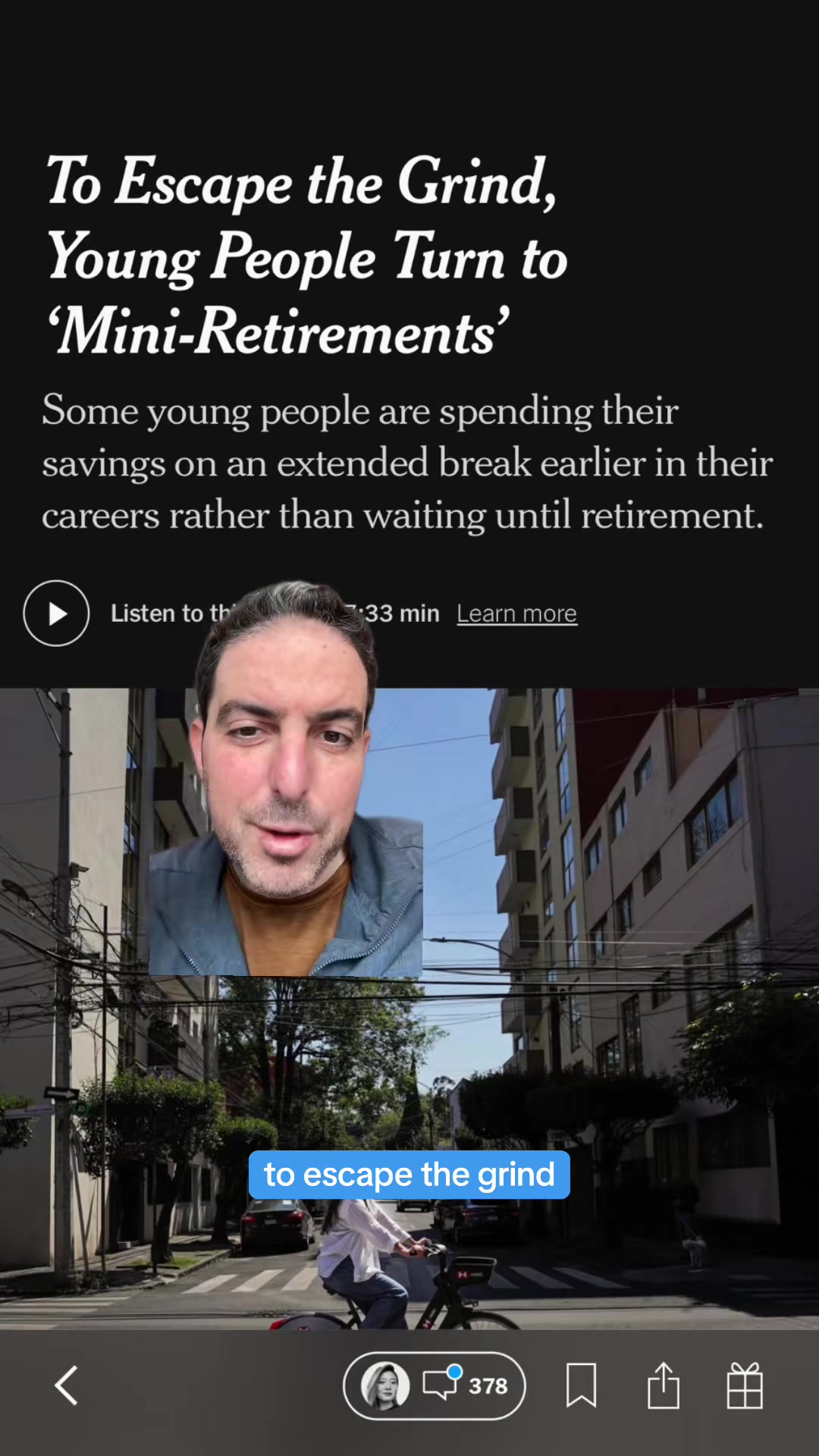
To escape the grind, young people are turning to what's being called mini-retirements. Some young people are spending their savings on an extended break, earlier in their careers, rather than waiting until retirement. Now, they didn't have a lot of stats in this article about how many young people are doing this, but they interviewed a few people that have done this, and what they had to say was quite interesting. And I also think very, very relatable. Like this woman, Ms. Kossar, who, after working a series of jobs in finance and tech, decided that she was feeling really overworked, and used some of her savings to focus on things that fell by the wayside. I had more time to work out. I was eating better, sleeping better. It was just like a full reset. For the first time in my adult life, I hadn't had this looming cloud of work. And then she came across the term for what she was going through, micro-retirement. For most people in the U.S., being able to save enough money to not have to work is a faraway ideal, especially with what's been going on now with the markets. Now, this just adds to the current cultural trend of people's relationship with work, especially post-COVID, and a researcher that is looking into all of this, especially the mini-retirement portion, is saying that people are just really taking this into their own hands and deciding what they want to do. A mini-retirement can take on many forms, taking extra time after being laid off to consider other paths, asking for unpaid leave, or building in a long stretch after voluntarily leaving a job. People that do take these breaks tend to be more financially stable. Then I interviewed another woman, Sandra de la Cruz, who was 25, when she took about four months off from work in 2015. She'd saved about $12,000. Her parents wanted her to buy a home, but she wanted to see family in Peru and travel around South America instead. And she did that for about four months. Then when she got back, she got another job as a contract analyst, and she credited her break in 2015 with giving her the confidence to navigate uncertainty in the workplace. There's been a few times in life that I felt that happy. You don't dread waking up and having to go to work. You just wake up and see where the day takes you. Isabel Falls was living in New York City and feeling adrift. I just felt like I lost my inner compass. Ms. Falls said, who was working as a design researcher at the time, I wanted to feel a bit more like I was alive and living. She built her savings and quit her job in May 2023, took a year off. It's a huge privilege to have been able to do it, and I really recognize that. Now Ms. Falls is in Mexico, at least for the time being, and working on a freelance basis for a travel agency. The flexibility of her job was enticing, she said, and she's still figuring out what her future looks like. Now of all the micro-retirees that the doctor that's researching this has interviewed, she said that they reaped benefits from their breaks, including increased confidence, clarity, and better work boundaries. She said her research had attracted interest from nonprofits and public sector employees who were exploring sabbatical policies to better attract job candidates. I never did something like this, but reading this article, I kind of wish I did. I'm curious if any of you have and what you got from it.
No AI insights yet
Save videos. Search everything.
Build your personal library of inspiration. Find any quote, hook, or idea in seconds.
Create Free Account No credit card required